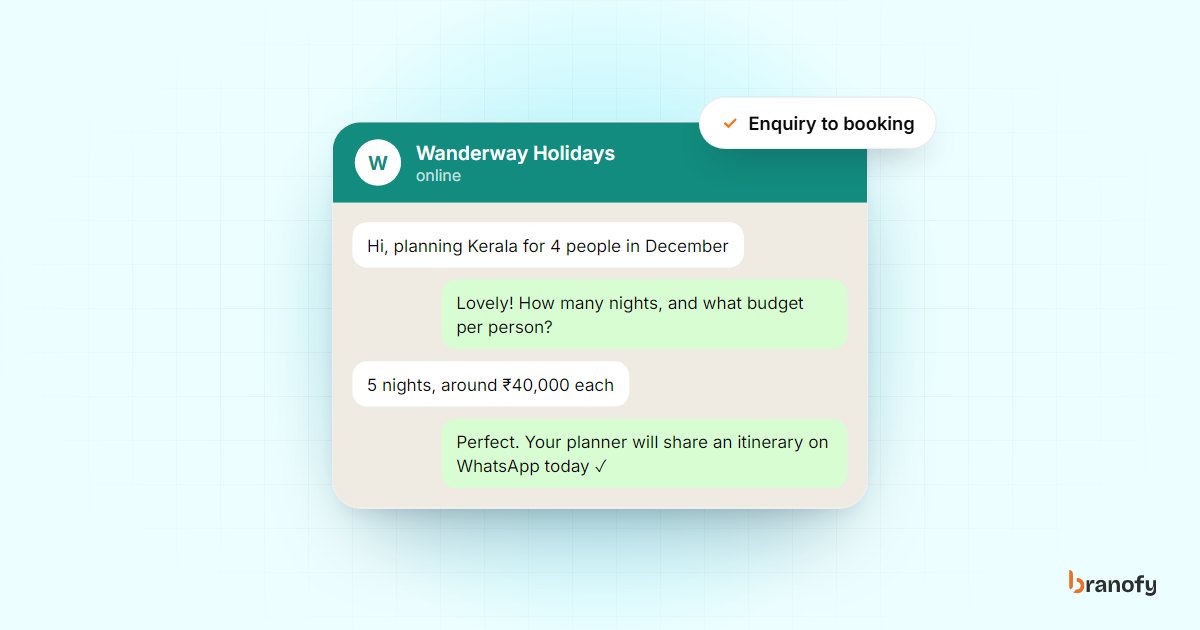
How travel agents can use AI to turn enquiries into bookings
On this page
AI helps travel agents most in the part of the job that comes before the itinerary: answering every enquiry fast, finding out the budget, dates and group size, and keeping the conversation alive on WhatsApp until the traveller is ready to book. AI can also help your team draft a day-by-day plan faster, but a good itinerary still needs a planner who knows the destination, the hotels and the client. The agencies that get the most from AI use it to win the enquiry, then let their people build and sell the trip.
This guide is for travel agencies and tour operators in India that get enquiries from Meta ads, Google ads, Instagram and their website. It covers where agencies lose bookings, how AI fits into each step, and what still needs a human.
Where travel agencies actually lose bookings
Most agencies don't lose bookings because their itineraries are weak. They lose them earlier.
- Slow first response. A family planning a Kerala trip sends enquiries to several agencies on a Sunday evening. The one that calls back first gets the first conversation.
- Enquiries with no details. "Please share Bali package" tells you nothing about dates, budget, number of travellers or hotel category, so the first quote is a guess.
- Itineraries sent to people who weren't serious. Your planners spend an hour on a custom plan for someone who was only browsing.
- No follow-up after the quote. The PDF goes out on WhatsApp and nobody checks in until the traveller has booked elsewhere.
- Peak-season overload. Before summer holidays, long weekends and Diwali, enquiries spike and your team can't call everyone the same day.
Each of these is a response and follow-up problem, which is where AI is genuinely useful today.
Step 1: respond to every enquiry instantly
The window right after someone submits an enquiry is when they are most engaged. They have just been looking at the beaches, the hill station or the visa page. A call in that moment feels helpful, not intrusive, because they asked for it.
The trouble is that enquiries arrive at night, on weekends and in bursts after a new ad goes live. A small team cannot call every lead within minutes, around the clock.
An AI calling agent can. Branofy's Pre-Sale Agent calls every new lead within 10 seconds, day or night, introduces your agency, asks the questions you set and switches language mid-call if the traveller is more comfortable in Hindi, Tamil, Kannada or another Indian language. Calls that aren't answered cost nothing, and your team gets a recording, a transcript and a short summary of each conversation. The same idea is behind our guide to speed-to-lead in Indian real estate: the first business to talk to the customer usually sets the frame.
Step 2: qualify the trip before anyone plans it
The most expensive thing a travel agency does is build a custom itinerary for someone who was never going to book. Qualification fixes that.
Agree on a short set of questions every first conversation must answer:
- Destination and flexibility. Fixed on one place, or open to suggestions?
- Travel dates. Fixed dates, a month, or "sometime this year"?
- Group. How many adults, children and senior citizens? Any special needs?
- Budget. Per person or total, and does it include flights?
- Hotel category and style. Budget, three-star, four-star, five-star, resort, homestay?
- Passport and visa status for international trips.
- Decision-maker. Is the person enquiring the one who will pay and decide?
These questions can be asked on the first AI call, so by the time your planner sees the lead, they already know it is a family of five, travelling in the May holidays, wanting a four-star stay in Munnar and Alleppey with a houseboat night. The Pre-Sale Agent uses a three-layer qualification (whether the person is reachable and genuine, whether they actually want a trip, and your own custom questions) and marks each lead HOT, WARM or COLD, with the reasons in the summary.
Your planners then spend their time where it pays:
- HOT: dates within the next few weeks, budget fits, decision-maker on the call. Build the itinerary today and call back personally.
- WARM: interested but dates or budget not firm. Send a sample itinerary and set a follow-up.
- COLD: browsing, wrong number, or far outside your offering. Keep them on a low-frequency nurture list.
Step 3: use AI to speed up the itinerary draft, not replace the planner
Once a lead is qualified, a general AI writing assistant can help your planner produce a first draft faster: a day-by-day outline, a packing list, a short description of each stop, or a version of the plan in Hindi for a client who prefers it.
Treat that draft as a starting point. AI tools can get distances, opening days, seasonal closures and travel times wrong, and they don't know your negotiated hotel rates, your ground partners or which drivers your clients like. A planner should check every day of the plan before it goes out.
What stays with your team:
- Choosing hotels and ground partners you trust.
- Pricing the package and building in your margin.
- Checking feasibility: travel times, connections, weather, local holidays.
- Bookings, payments and changes, through whatever systems your agency already uses.
AI calling and chat tools don't build itineraries or make bookings. Their job is to get you to that point with more qualified travellers, and to keep them engaged once the plan is sent.
Step 4: share the itinerary on WhatsApp and keep the conversation going
Most Indian travellers want the plan on WhatsApp, not by email. Your team sends the itinerary PDF, hotel photos and the price breakdown in the chat, and the conversation about changes happens there too.
Two things help here:
- One shared WhatsApp inbox for the team. When the planner is on leave, a colleague can see the full chat history and pick up where they left off. Lead Navigator includes WhatsApp team live chat and approved message templates, so the conversation sits next to the lead's record rather than on one person's phone.
- AI replies to routine questions. "Are flights included?", "Is the houseboat AC?", "What is the cancellation policy?" The Inbox Agent answers on WhatsApp, Instagram DM, Facebook Messenger and your website chat from your own knowledge base, which you fill with package details, inclusions, policies and FAQs. When the traveller is upset, or the question needs a person, it hands the conversation to your team.
Step 5: follow up until they decide
A quote with no follow-up is a quote you have mostly given away. Travellers compare, discuss with family and get distracted. A polite, timely message often decides who gets the booking.
A simple follow-up sequence after the itinerary is sent:
- Same day: "Sharing the itinerary for your Munnar trip. Happy to change any day or hotel."
- Day 2: a call or message to answer questions and offer one alternative (a different hotel category, or one fewer night).
- Day 4: a reminder about anything time-sensitive that is true, such as hotel availability for their dates.
- Day 7: a final check-in, and an offer to keep them posted on similar trips.
Follow-up Automation can send WhatsApp and email sequences like this based on the lead's status, and alert your team when a lead has gone quiet for one, three or seven days, so nobody falls through the gaps. It is included with the Inbox Agent or available on its own.
Step 6: use broadcasts for repeat and seasonal travel
Past travellers and warm leads are your cheapest source of the next booking. With their consent, send occasional broadcasts for:
- School summer holiday and Diwali trip ideas.
- Group departures with fixed dates.
- New destinations or packages you have added.
Keep broadcasts relevant and infrequent. People who opted in for a Goa enquiry don't want a message every day. WhatsApp marketing messages are billed by Meta per message; our note on WhatsApp pricing explains how that works with Branofy.
What a working setup looks like
| Stage | Handled by AI | Handled by your team |
|---|---|---|
| New enquiry | Instant call, introduction, basic questions | Reviewing the summary |
| Qualification | Dates, group, budget, destination, HOT / WARM / COLD | Deciding who to call back first |
| Itinerary | First-draft help from a writing assistant | Checking, pricing and finalising the plan |
| Sharing and questions | Answers to routine questions from your knowledge base | Sending the itinerary, negotiating changes |
| Follow-up | Scheduled WhatsApp and email reminders, inactivity alerts | Personal calls to HOT leads |
| Booking | None | Payments, bookings and travel documents |
You can see how this is set up for agencies on our travel solutions page, and resorts and hotels can look at the hospitality page.
Mistakes to avoid
- Letting AI promise things. Keep the knowledge base accurate and up to date. If prices change every season, say "from" prices and ask the team to confirm.
- Skipping the human handoff. Upset travellers, visa problems and medical needs should always reach a person quickly.
- Sending itineraries before qualifying. A two-minute conversation saves an hour of planning.
- Measuring only enquiries. Track enquiries, qualified leads, itineraries sent and bookings, by ad campaign. That shows which campaigns bring travellers who actually book.
Frequently asked questions
Can AI create a complete travel itinerary on its own?
+
A general AI assistant can draft an outline quickly, but it can get distances, timings and seasonal details wrong, and it doesn't know your hotel rates or ground partners. Use it for a first draft and have a planner check and price every day before sending.
Will travellers be comfortable talking to an AI caller?
+
Most people who have just submitted an enquiry are expecting a call, and a quick, polite call that asks about their dates and group is helpful. Keep the call short, say who is calling, and hand over to your team as soon as the traveller wants a person.
What questions should the first call ask a travel lead?
+
Destination, travel dates, number of adults, children and seniors, budget per person or in total, hotel category, and for international trips, passport and visa status. Also ask whether the person enquiring is the one who will decide and pay.
Can the AI answer questions about our packages on WhatsApp?
+
Yes, if you add your package details, inclusions, policies and FAQs to the knowledge base. The Inbox Agent replies from that content on WhatsApp, Instagram DM, Messenger and website chat, and hands the conversation to your team when it needs a person.
Does the AI handle flight or hotel bookings?
+
No. The AI handles the enquiry side: instant calling, qualification, WhatsApp conversations, follow-ups and your CRM. Bookings, payments and travel documents stay with your team and the systems you already use.
How Branofy does this for you
Branofy runs your WhatsApp follow-up
- The Inbox Agent replies on WhatsApp, Instagram DM, Messenger and your website chat, 24/7, from your own knowledge base.
- Follow-up Automation sends nurture sequences and inactivity reminders, included free with the Inbox Agent.
- Broadcasts go out at Meta's own rates, with 0% markup from Branofy.
Want this working for your leads?
Leave your details and we'll call you back to show Branofy on your own lead flow.
Related Articles
Speed-to-lead in Indian real estate: why the first call wins
Indian property buyers enquire with several projects at once, and the developer who calls first usually books the visit. How to get your response time down.
October 27, 2026
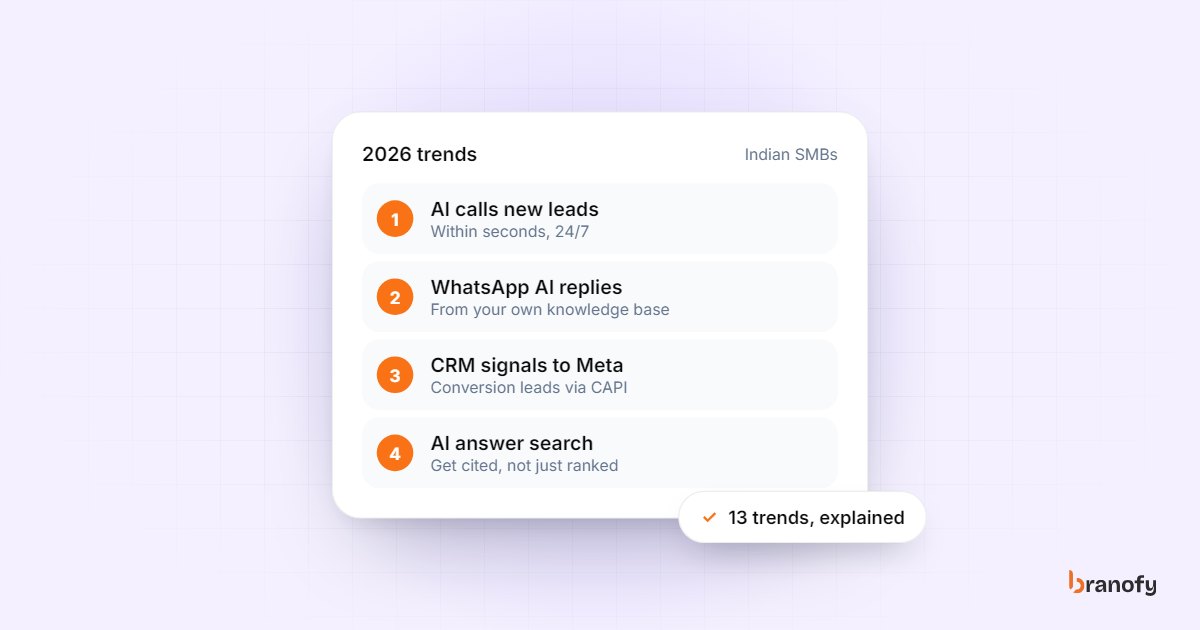
13 AI marketing automation trends for Indian SMBs in 2026
The AI marketing automation trends that matter for Indian SMBs buying leads from Meta, Google and portals in 2026, and which ones to act on first this year.
February 3, 2026
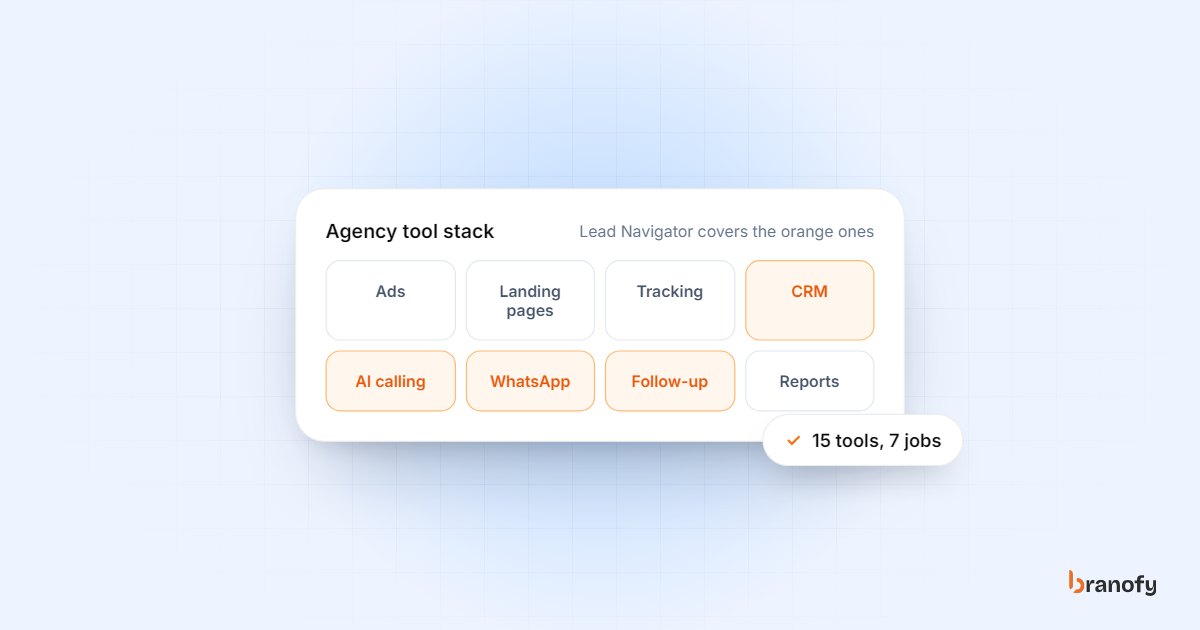
15 marketing automation tools every agency needs in 2026
The 15 marketing automation tools and jobs an Indian agency needs in 2026, from ad platforms and landing pages to instant lead calling, WhatsApp and reporting.
January 29, 2026