Speed-to-lead in Indian real estate: why the first call wins
On this page
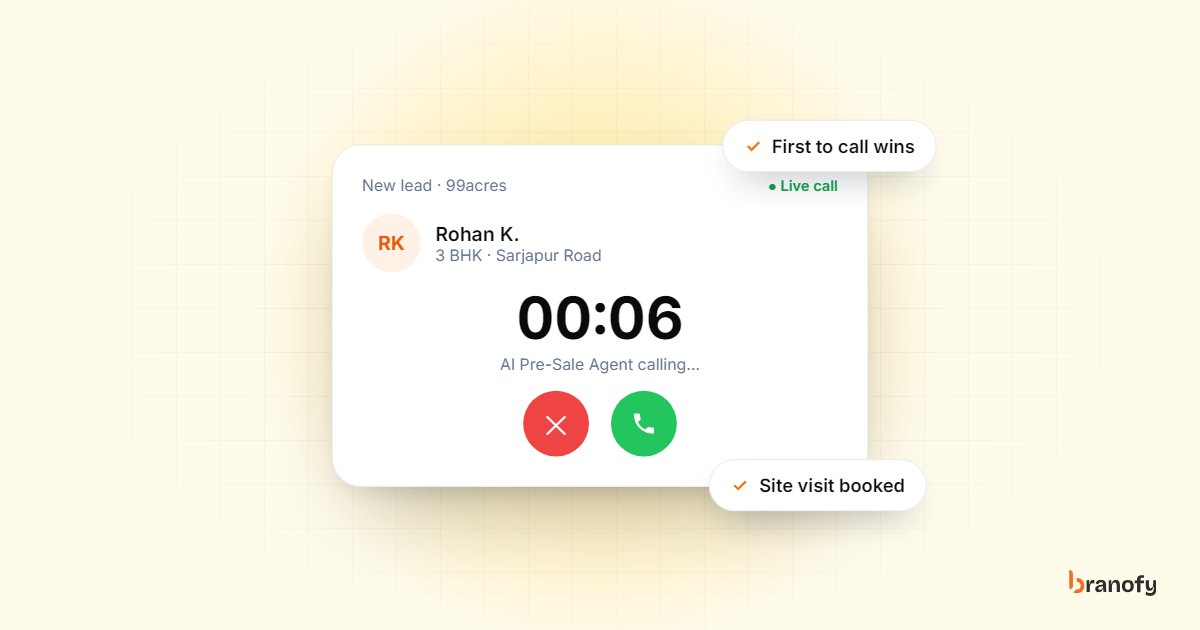
Speed-to-lead is the time between a buyer submitting an enquiry and someone from your team actually speaking to them, and in Indian real estate it often decides who gets the site visit. Buyers enquire with several projects on Meta, 99acres and MagicBricks in the same sitting, so the developer who calls while the buyer is still holding their phone has the best chance of booking the visit. If your callbacks take hours, you are paying for leads that a faster competitor converts.
This guide is for developers and brokers spending ₹2 lakh or more a month on Meta and portal leads. It covers where the delay comes from, how manual telecalling compares with AI calling, and what you can change this week.
What speed-to-lead means for a developer
Speed-to-lead sounds simple: call new leads quickly. In practice, the clock starts the moment the buyer taps "Submit", not the moment your sales team sees the lead.
Between those two moments sit three separate delays:
- Delivery delay. How long the lead takes to travel from Meta or the portal into the system your team works from.
- Assignment delay. How long it waits before a specific person owns it.
- Dialling delay. How long that person takes to actually pick up the phone and call.
Most teams only look at the third one. The first two are often longer, and they are invisible unless you measure them.
Why the first minutes matter more in real estate
Buyers shortlist several projects at once
A buyer looking for a 2 or 3 BHK rarely enquires about one project. They scroll through ads and listings, fill in three or four forms in one evening, and then wait to see who calls.
The first call sets the frame. The developer who reaches them first gets to answer their questions, describe the project and suggest a visit before anyone else has spoken to them. Every later caller is competing against that first conversation.
Intent fades quickly after a form fill
Right after submitting an enquiry, the buyer remembers your project, your price band and why they were interested. A few hours later, they may not remember which ad they clicked.
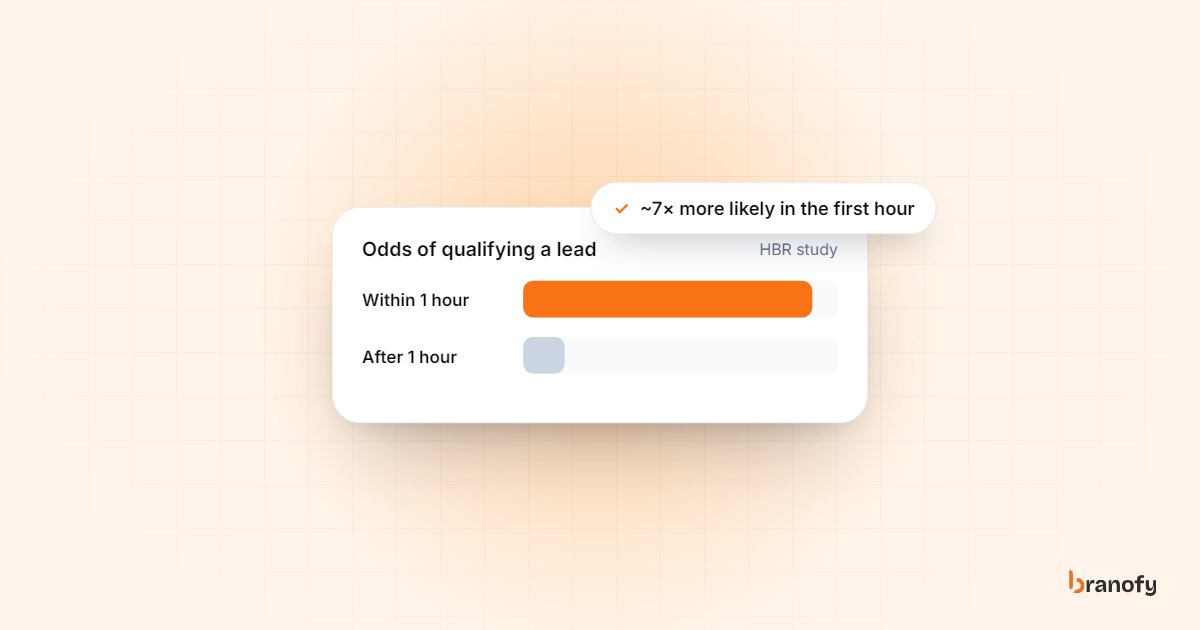
A Harvard Business Review study of online leads found that firms which tried to contact a lead within an hour were nearly seven times as likely to qualify it as firms that waited longer. That research is from the US and not specific to property, so treat your own CRM as the better evidence: compare the contact rate for leads called within five minutes with those called the next day. We cover the research in more detail in lead response time statistics.
Enquiries do not arrive during office hours
Property research happens in the evening, late at night and on weekends, when buyers finally have time. Check your own lead log: count how many enquiries arrived between 7 pm and 9 am, and on Sundays. For many teams it is a large share, and every one of those leads waits for the next shift.
A lead that arrives at 9 pm on Saturday and gets a call on Monday afternoon has waited well over a day. By then, they may have already visited a competitor's sample flat.
Where the delay actually comes from
Lead delivery from Meta and the portals
Meta instant forms and portal enquiries each reach you differently. Some teams download leads in batches, some forward email alerts to a sales WhatsApp group, and some have a direct integration into their CRM.
Batch downloads and email forwarding add delay before anyone even knows the lead exists. If your team works from spreadsheets refreshed twice a day, your fastest possible response is half a day.
Assignment gaps
Round-robin rules break down in small, busy teams. A lead lands with someone who is on leave, on a site visit or already on a call, and nobody else picks it up because it is "theirs".
Leads without a clear owner are the ones that never get called at all.
Telecaller capacity at peak times
Lead flow is uneven. A new campaign, a price announcement or a weekend spike can bring more enquiries in a few hours than your team can call in a day. During those peaks, the newest leads, which are the most valuable, wait behind the queue.
Time lost on the wrong leads
Wrong numbers, brokers posing as buyers, duplicate enquiries and people who clicked by mistake all take time to work through. Every minute spent on them is a minute a genuine buyer waits.
Manual telecalling vs AI calling
The question is not whether people or software are better at selling property. People run site visits and close sales. The question is who handles the first response, because that is where speed is won or lost.
| Manual telecalling | AI calling | |
|---|---|---|
| First response time | Depends on queue, staffing and shift timings, often hours | Within seconds of the lead reaching your system |
| Cost per site visit | (Salaries + incentives + phones and calling plans + supervision) ÷ site visits booked | (Platform fee + calling minutes) ÷ site visits booked |
| After-hours and Sunday coverage | Only if you staff evening and weekend shifts | 24/7, including Sundays and holidays |
The cost row is a formula on purpose. Your numbers depend on salaries in your city, your lead volume and your visit rate, so calculate both sides from your own last 30 days rather than trusting a generic benchmark.
What usually changes the result most is not the cost side but the number of site visits booked. Leads called within seconds, including at night and on Sundays, have more chances to book than leads called the next afternoon.
AI calling is most useful as the first layer: it calls every lead, asks the qualifying questions and hands over the serious buyers. Branofy calls every new lead within 10 seconds and passes qualified buyers to your sales team with a summary of the conversation, so your people spend their time on visits rather than dialling.
What to measure before you change anything
Pull these numbers for the last 30 days before you change your process. Without them, you will not know whether anything improved.
- Median time to first call. From form submission to the first dialled call, not to the first note in the CRM.
- Share of leads called within five minutes.
- Contact rate. The share of leads you actually spoke to.
- Site visits booked per 100 leads.
- Cost per site visit. Total ad spend plus calling costs, divided by visits that happened.
- After-hours share. How many leads arrived outside working hours, and how long they waited.
If your CRM cannot tell you the first two, that is your first finding.
Practical steps you can take this week
You do not need a new team or a new campaign to respond faster. Start with these.
1. Measure your real response time
Pick 20 recent leads from Meta and the portals. For each one, note when the enquiry was submitted and when the first call was actually made. The gap is your real speed-to-lead, and it is usually longer than the team believes.
2. Connect lead sources directly
Stop downloading leads in batches. Connect Meta instant forms and your portal accounts so new enquiries arrive in your CRM as they happen, with the source and project attached.
3. Give every lead an owner within a minute
Set a simple rule: every new lead is assigned to a named person, or to an automated first call, within a minute of arriving. If the owner is unavailable, it moves to the next person automatically.
4. Cover evenings and Sundays
Decide what happens to a lead that arrives at 9 pm or on a Sunday. Either roster someone to call or automate the first call. "We will call on Monday" is a decision too, and it is usually the expensive one.
5. Standardise the first-call questions
Agree on four or five questions every first call must answer:
- Are you buying to live in or to invest?
- What budget range are you considering?
- Which configuration and location do you prefer?
- When are you planning to buy?
- Are you enquiring for yourself or on behalf of a client?
The last question helps separate genuine buyers from brokers without making anyone feel accused.
6. Book the visit on the first call
Offer two specific slots rather than asking when they are free. As soon as the call ends, send the location pin, brochure and price sheet on WhatsApp so the buyer has everything in one place.
7. Follow up on unanswered calls
Not every lead picks up the first time. Agree on a short follow-up sequence: another call later the same day, a WhatsApp message that explains who you are, and a final call the next day.
8. Tell Meta which leads became buyers
Mark leads as qualified, visited or booked in your CRM, and send those outcomes back to Meta through the Conversions API. Meta then looks for more people like your real buyers instead of more cheap form fills. Branofy syncs leads from 99acres, MagicBricks and Meta into one pipeline and sends qualified outcomes back to Meta; you can compare plans on the pricing page.
How to tell if it is working
Re-run the measurements from earlier after 30 days, on the same campaigns. Look for:
- A shorter median time to first call.
- A higher contact rate, especially for evening and weekend leads.
- More site visits booked per 100 leads.
- A lower cost per site visit, even if your cost per lead stays the same.
If response time improved but visits did not, look at the first-call questions and how quickly the visit is offered. Speed gets you the conversation; the conversation still has to book the visit.
Frequently asked questions
What is a good lead response time for real estate in India?
+
As fast as you can reliably make it. Many teams set a target of a few minutes during working hours and automate the first call outside them. The right target for you is the one your own data shows converts best, so compare contact rates by response time in your CRM.
Does calling within seconds feel intrusive to buyers?
+
Usually not, because the buyer has just asked to be contacted and is expecting a call. Introduce yourself, name the project they enquired about and ask whether it is a good time to talk. If it is not, agree on a time and keep it.
Should portal leads and Meta leads be handled the same way?
+
The speed should be the same, but the first question can differ. Portal buyers have often compared several listings already, while Meta leads may be earlier in their search. Start portal calls with the specific listing and Meta calls with what made them interested.
Is it legal to call a lead immediately after they enquire?
+
Calling someone who has just requested a callback is a response to their own request. You still need to follow TRAI's rules on commercial calls, including DND preferences and permitted calling hours. Our straight answer on AI calling in India covers what to check.
Will faster calling lower my cost per lead?
+
No. Your cost per lead is set by your ads and targeting. Faster calling lowers your cost per site visit, because more of the leads you have already paid for turn into visits. To improve lead quality itself, send qualified outcomes back to Meta through the Conversions API.
How Branofy does this for you
Branofy calls every new lead for you
- Lead Navigator's Pre-Sale Agent calls each new lead within 10 seconds, day or night, including weekends.
- It qualifies them in three layers and scores them HOT, WARM or COLD before your team picks up.
- It books the meeting or site visit straight onto your team's calendar, in the caller's language.
Want this working for your leads?
Leave your details and we'll call you back to show Branofy on your own lead flow.
Related Articles
Automated lead generation for construction and interiors firms
How construction and interiors firms in India can automate lead capture, instant calling, qualification on plot, budget and timeline, and WhatsApp follow-up.
January 25, 2026
Real estate follow-up scripts that book more site visits
Word-for-word call and WhatsApp follow-up scripts for Indian real estate teams, from the first call to the site visit no-show and the lead that went quiet.
January 13, 2026
Lead response time statistics: what the research really says
The real lead response time research, what each study measured, where the numbers come from, and what they mean for Indian businesses buying leads online.
December 11, 2025