Automated lead generation for construction and interiors firms
On this page
Automated lead generation for construction and interiors firms means every enquiry from ads, portals and your website lands in one system, gets called within seconds, is qualified on plot size, budget and timeline, and is followed up on WhatsApp until it books a site visit or drops out. Automation does not replace your sales team or your site engineers. It removes the delays and missed follow-ups that lose good projects before anyone has spoken to the client.
This guide is for home builders, turnkey construction companies, interior designers and modular kitchen and wardrobe firms in cities like Bengaluru, Pune, Hyderabad and Chennai who get leads from Meta, Google and property portals.
Why construction leads are hard to convert
Construction and interiors enquiries have a few traits that make them different from, say, an e-commerce purchase:
- High ticket, long cycle. A house construction or full-home interiors project can take months to decide. The first call rarely closes anything, but it decides whether you get the site visit.
- Shopping around is normal. Homeowners collect quotes from several builders or designers before choosing one. The firm that responds first and sounds organised sets the benchmark for everyone else.
- Many enquiries are early or vague. "I have a plot, want to know the cost" might be a serious client starting next month or someone planning for three years from now.
- Owners are busy on site. In smaller firms the founder is often the main salesperson, and calls go unanswered while they are on a site or in a client meeting.
The result is a familiar pattern: leads come in, a few get called the same day, many get called days later, and very few get a structured follow-up.
Where construction and interiors leads come from
Before automating anything, list every source your enquiries come from. For most firms it looks like this:
- Meta ads (Facebook and Instagram) with instant forms or a landing page.
- Google Search ads for terms like "house construction cost in Bengaluru" or "interior designers in Pune".
- Property portals such as 99acres and MagicBricks, mostly relevant for builders selling ready plots or homes.
- Website forms and cost calculators.
- Instagram and Facebook DMs from people who saw your project reels.
- Referrals and walk-ins, often entered into a spreadsheet by hand.
The first step in automation is getting all of these into one place automatically, with the source and campaign attached. If your team still downloads leads into Google Sheets twice a day, that alone adds hours of delay before anyone calls.
Step 1: Capture every lead in one CRM
Connect your lead sources directly so enquiries arrive as they happen:
- Meta lead forms and Google lead forms connected to the CRM, not downloaded as files.
- Portal accounts connected so their enquiries flow in alongside ad leads.
- Website forms sent by webhook, with the page or calculator they came from.
- Old leads and referral lists imported once from CSV so everything is in one pipeline.
Then set up a pipeline that matches how your projects actually move. A simple version for a construction firm:
- New enquiry
- Contacted
- Qualified
- Site visit or office meeting booked
- Site visit done
- Estimate or design proposal sent
- Negotiation
- Won or lost
Interiors firms might replace "site visit" with "home measurement" and "estimate" with "design presentation".
Branofy's Lead Navigator pulls leads from Meta Ads, Google Ads, 99acres, MagicBricks, Google Sheets, website forms and CSV into one pipeline, with assignment rules so each lead gets an owner straight away.
Step 2: Call every new lead instantly
The biggest single improvement most firms can make is calling new leads within minutes, including evenings and Sundays when homeowners actually have time to think about their project. We have written separately about why the first minutes matter in property, and the same logic applies to construction and interiors.
There are two ways to do it:
- Manual: a telecaller or sales executive with a rule that every lead is called within five minutes during working hours, and a plan for leads that arrive after hours.
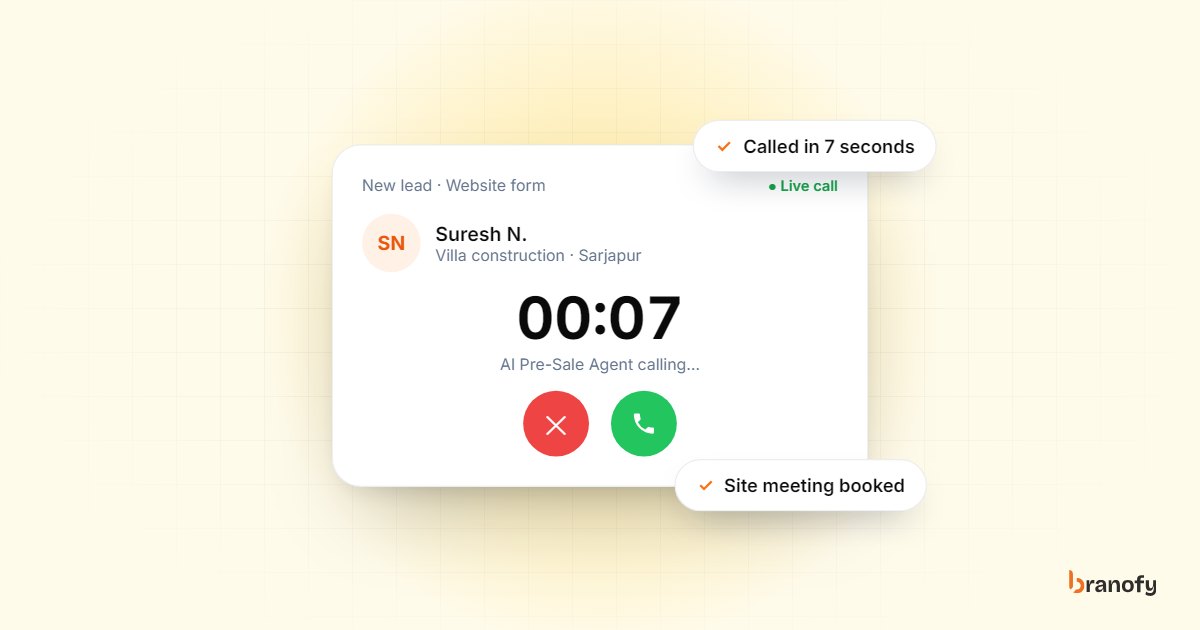
- AI calling: an AI voice agent that calls every new lead within seconds, asks the first qualifying questions and hands over interested clients to your team.
Branofy's Pre-Sale Agent calls every new lead within 10 seconds, day or night, switches language mid-call (including Hindi, Kannada and Tamil), and books meetings or site visits on your team's calendar. Every call is recorded, transcribed and summarised, so your sales person knows the client's plot size and budget before they pick up the phone. Unanswered calls cost nothing.
Step 3: Qualify on the questions that matter
Most of a construction sales team's time is lost on enquiries that were never going to become projects. A consistent set of qualifying questions, asked on the first call, fixes that.
Qualifying questions for construction firms
- Plot details. Do you own the plot? Where is it, and what is the size (for example 30x40 or 40x60)?
- Approvals. Is the plan approved, or do you need help with approvals?
- Scope. How many floors? Independent house, duplex, or rental units?
- Budget. What budget range are you considering for construction?
- Timeline. When do you want to start?
- Decision-maker. Who else is involved in the decision?
Qualifying questions for interiors firms
- Property. What configuration is it (2 BHK, 3 BHK, villa), and where is it?
- Possession. Do you already have possession, or when is it expected?
- Scope. Full home interiors, or specific rooms such as kitchen and wardrobes? Modular or carpentry-based?
- Budget. What range are you planning for (for example under ₹5 lakh, ₹5 to 10 lakh, above ₹10 lakh)?
- Timeline. When do you want to move in or complete the work?
Turning answers into HOT, WARM and COLD
Agree internally on what each label means. One example for a builder:
| Label | What it usually means | What your team does |
|---|---|---|
| HOT | Owns the plot, budget fits, wants to start in the next few months | Senior sales person calls the same day and books a site visit |
| WARM | Owns the plot but timeline is further out, or budget is unclear | WhatsApp nurture with past projects and cost guidance, call again in a few weeks |
| COLD | No plot yet, wrong location, or just collecting prices | Long-term nurture, no sales time spent for now |
The Pre-Sale Agent qualifies in three layers: whether the person is reachable and genuine, whether they have real intent for your type of project, and your own custom questions such as plot size or possession date. It then marks the lead HOT, WARM or COLD with an AI summary of the conversation. You set the screening questions however you want.
Step 4: Nurture on WhatsApp until they are ready
Because construction decisions take time, most good leads will not be ready on the first call. The firms that win are the ones that stay in touch in a useful way, not the ones that call every two days asking "Any update?"
A simple WhatsApp sequence for a WARM construction lead:
- Day 0: Thank-you message with your company profile and a few completed projects in their area.
- Day 2: A short cost guide: what drives construction cost per square foot, and what is included in your packages.
- Day 7: A video walkthrough of an ongoing site.
- Day 14: An invitation to visit an ongoing project or your office on a specific weekend.
- Day 30: A check-in asking whether their timeline has changed.
For interiors, swap in design portfolios, a modular versus carpentry explainer, material options and an invitation to the experience centre.
Follow-up Automation in Lead Navigator runs WhatsApp and email sequences triggered by lead status, score or inactivity, and sends your team inactivity alerts after 1, 3 or 7 days so leads do not go quiet unnoticed. If a client replies with a question at 11 pm, the Inbox Agent can answer from your own knowledge base (your packages, process and FAQs) and hand over to a person when needed.
Step 5: Close the loop with your ads
Once leads are being qualified consistently, use that data. Mark which campaigns produce HOT leads and site visits, not just the most enquiries. Send qualified and site-visit outcomes back to Meta through the Conversions API, so Meta optimises for people who look like your real clients rather than anyone who fills a form.
This is often where cost per project falls the most, even if cost per lead goes up. Our growth marketing service runs Meta and Google campaigns optimised for meetings and site visits in exactly this way.
Common mistakes to avoid
- Automating before agreeing the questions. If your team has not agreed what makes a lead HOT, no tool will decide it for you.
- Sending price lists before understanding the project. A generic rate per square foot invites comparison on price alone.
- Too many WhatsApp messages. A useful message every few days beats daily promotions. Stop the sequence when the client replies or books.
- No owner for walk-ins and referrals. These are often your best leads. Enter them into the same pipeline.
- Not reviewing call recordings. Listen to a few calls each week to refine the questions and the hand-over.
If you are a builder or developer, see how this works for real estate and construction teams.
Frequently asked questions
What is automated lead generation in construction?
+
It is the use of software to capture enquiries from ads, portals and your website into one CRM, call them quickly, qualify them with consistent questions and follow up on WhatsApp or email automatically. Your team still runs site visits, estimates and negotiations. Automation makes sure no lead waits or gets forgotten before that.
Will homeowners talk to an AI calling agent?
+
Most people who have just filled an enquiry form expect a call and are happy to answer a few questions about their plot or home. The AI introduces itself, asks the agreed questions and offers to book a visit or connect them with your team. Anyone who wants a person can be handed over.
Which questions should we ask on the first call?
+
For construction: plot ownership, location and size, approvals, number of floors, budget range, timeline and who decides. For interiors: configuration, location, possession date, scope (full home or specific rooms), budget range and move-in timeline. Keep it to five or six questions and leave detailed design discussion for the meeting.
How often should we follow up on WhatsApp?
+
Every few days at first, then weekly or fortnightly for leads with longer timelines. Each message should give something useful, such as a project video, cost explainer or site visit invitation. Stop the automated sequence as soon as the client replies so a person can take over.
Can we use the same setup for 99acres and Meta leads?
+
Yes. The leads should land in the same pipeline and get the same speed of response. The opening line can differ: portal enquiries often mention a specific listing, while Meta leads usually respond to an ad about your services or a past project.
How Branofy does this for you
Branofy calls every new lead for you
- Lead Navigator's Pre-Sale Agent calls each new lead within 10 seconds, day or night, including weekends.
- It qualifies them in three layers and scores them HOT, WARM or COLD before your team picks up.
- It books the meeting or site visit straight onto your team's calendar, in the caller's language.
Want this working for your leads?
Leave your details and we'll call you back to show Branofy on your own lead flow.
Related Articles
Speed-to-lead in Indian real estate: why the first call wins
Indian property buyers enquire with several projects at once, and the developer who calls first usually books the visit. How to get your response time down.
October 27, 2026
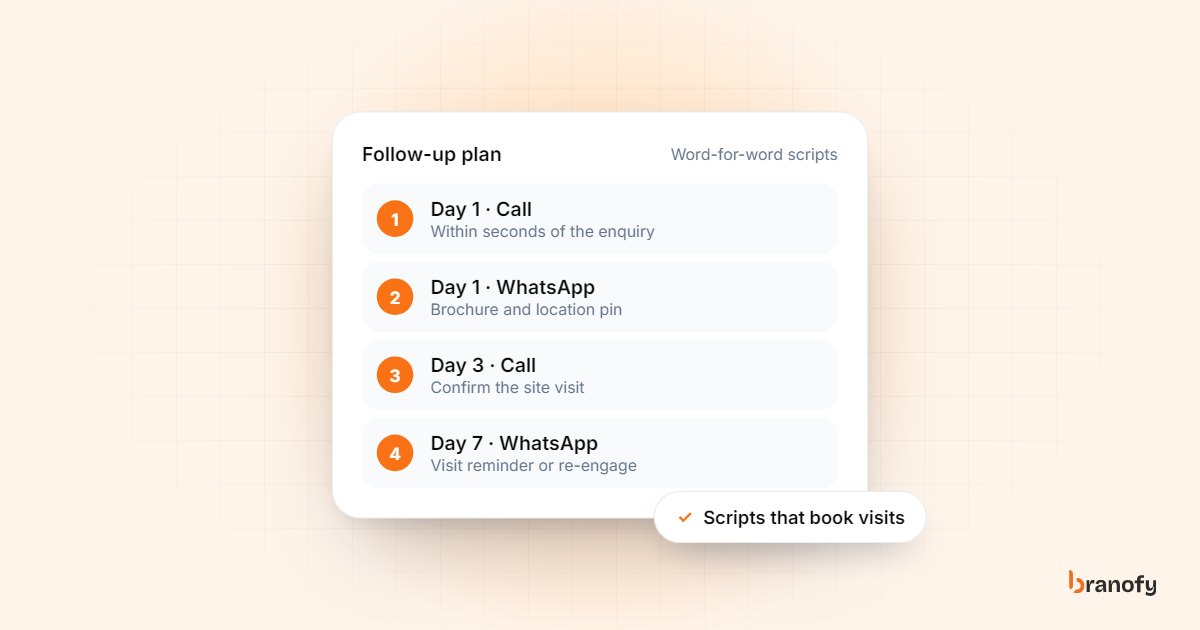
Real estate follow-up scripts that book more site visits
Word-for-word call and WhatsApp follow-up scripts for Indian real estate teams, from the first call to the site visit no-show and the lead that went quiet.
January 13, 2026
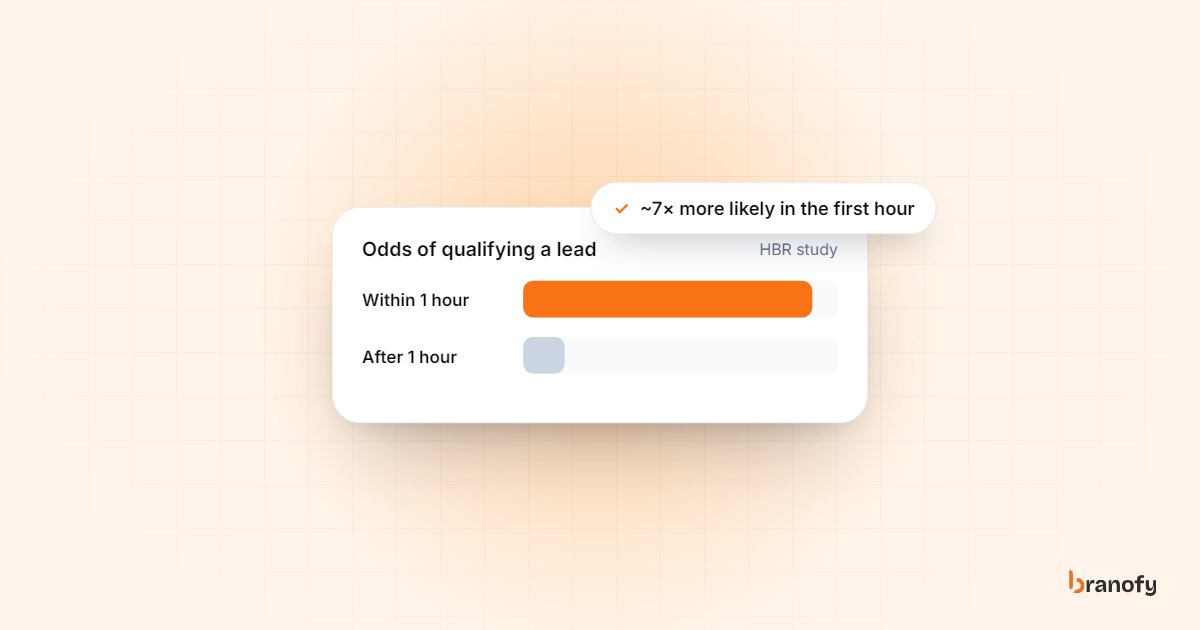
Lead response time statistics: what the research really says
The real lead response time research, what each study measured, where the numbers come from, and what they mean for Indian businesses buying leads online.
December 11, 2025