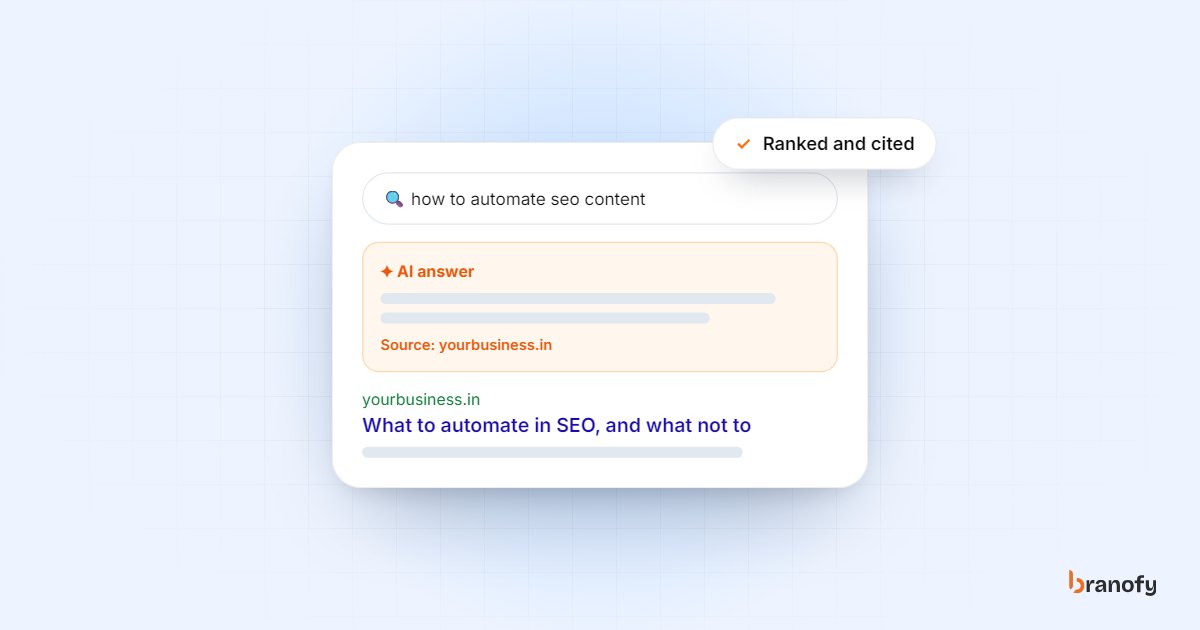
Content automation for SEO: what to automate and what not to
On this page
Content automation for SEO can save hours on research, briefs, internal linking, schema and content refreshes, but it backfires when it is used to mass-publish pages nobody needed. Google's own guidance says AI can help you research and structure original content, while generating many pages without adding value for users may count as spam. The safe approach is to automate the repetitive groundwork and keep people responsible for the expertise, accuracy and final say on what gets published.
This guide is for owners and marketing heads of Indian businesses (developers, clinics, coaching institutes, dealers, travel agencies, hotels) who want more organic enquiries without risking their site.
What Google actually says about automated and AI content
Before deciding what to automate, it helps to read what Google has published, rather than relying on forum rumours.
- Google's guidance on generative AI content says generative AI can be useful for researching a topic and adding structure to original content. It also says that using these tools to generate many pages without adding value for users may violate its spam policy on scaled content abuse, and it recommends fact-checking AI-generated content, including metadata and structured data, before publishing.
- Google's spam policies define scaled content abuse as generating many pages primarily to manipulate search rankings rather than to help users, regardless of how the content is made. Examples include using AI to produce many pages that add no value, scraping and rewording other sites, and stitching content from different pages together without adding anything.
- Google's page on creating helpful, people-first content asks site owners to think about who created the content, how and why. If the main reason for a page is to attract search visits rather than help people, that is the problem, whichever tool wrote it.
The takeaway: the method is not the issue. The purpose and the value are. An AI-assisted article written by someone who knows the subject, checked for accuracy and useful to the reader is fine. A thousand auto-generated "best clinic in [city]" pages are not.
What you can safely automate
These are the tasks that eat time, follow clear rules and do not need deep expertise to do well. Automating them frees your writers and subject experts for the parts only they can do.
Keyword and question research
Tools can pull search terms, group related queries, and list the questions people ask around a topic. For a Bengaluru developer, that might surface "possession date", "RERA number", "maintenance charges" and "distance from metro" around a project name. A person still decides which topics match your business and which searches come from real buyers.
Content briefs and outlines
Once a topic is chosen, AI can draft a brief: the search intent, the questions to answer, the headings competitors cover, and what your page should add. The writer and the subject expert then fix it. A good brief saves more time than any drafting tool, because it stops rewrites.
First drafts of low-risk sections
Definitions, step lists and FAQ answers that restate facts you have supplied can be drafted by AI and then edited. Treat every draft as unverified until someone who knows the subject has checked it.
Internal linking suggestions
Software can scan your site and suggest where a new post should link to existing pages, and which older posts should link to the new one. A person approves the links so the anchor text reads naturally and the links help the reader.
Titles, meta descriptions and schema
Title tags, meta descriptions and structured data (such as FAQ, Article or LocalBusiness markup) follow templates, so they automate well. Google's guidance specifically asks you to check AI-generated metadata and structured data for accuracy, so review the output, especially prices, addresses and timings.
Technical checks
Broken links, missing alt text, slow pages, duplicate titles and redirect chains can be detected automatically on a schedule. Fixing them may still need a developer, but finding them should never be manual.
Refresh reminders
Set alerts for posts that mention prices, dates, offers or regulations, and for pages whose search traffic is falling. Refreshing a good existing page is often worth more than publishing a new one.
What still needs a person
| Task | Automate? | Why |
|---|---|---|
| Keyword and question research | Yes, with human selection | Tools find terms; people judge buyer intent |
| Briefs and outlines | Yes, then edit | Saves time; needs your angle added |
| Expert insight and examples | No | This is what makes the page worth ranking |
| Facts, prices, statistics | No, verify by hand | AI models predict words; they do not check facts |
| Internal links, meta tags, schema | Yes, with review | Rule-based, but errors are public |
| Publishing decisions | No | Someone must own whether a page should exist |
First-hand experience
What your sales team hears on calls, the questions patients ask at the front desk, the reasons parents choose one coaching batch over another: this is the material no tool has. It is also what makes a page more useful than the ten others on the same topic.
Accuracy and claims
Every number, price, regulation and medical or legal statement needs checking against a source. If you cannot verify a statistic, leave it out. Made-up figures damage trust with readers and with AI answer engines that may quote you.
Tone and brand
Automated drafts tend to sound the same. A person should make sure the page sounds like your business, uses your customers' words, and does not overclaim.
Deciding what to publish
The most important SEO decision is whether a page should exist at all. If you would not send the page to a customer who asked that question, it should not be published.
A safe content automation workflow
Here is a simple process an in-house marketer or a small agency team can run each month.
- Collect real questions. Export questions from WhatsApp chats, call notes and enquiry forms. These are your best topics, and they come from your own customers.
- Run automated research. Check search demand and related questions for each topic, and group them so one strong page covers a cluster instead of five thin ones.
- Generate a brief. Use AI to draft intent, headings and questions. Have the writer add your angle and the expert add what only you know.
- Write and edit. Draft with or without AI help, then edit for accuracy, examples and tone. The subject expert signs off.
- Automate the finishing. Generate meta tags, schema and internal link suggestions; a person reviews them.
- Publish at a steady pace. A few genuinely useful pages a month beat dozens of thin ones.
- Monitor and refresh. Let automated reports flag falling pages, broken links and outdated facts, and schedule refreshes.
Content automation and AI answer engines
More people now ask ChatGPT, Gemini, Perplexity or Google's AI features instead of scrolling through ten blue links. These answer engines tend to quote pages that state a clear answer early, use specific facts, and are consistent across the web.
That rewards the same habits as good SEO: answer the question in the first paragraph, use clear headings and FAQ sections, keep your business details identical everywhere, and avoid vague filler. Automation helps by keeping schema, FAQs and facts in sync across pages. It does not help if it floods your site with near-duplicate pages, because they dilute the signal about what your business actually does.
This combined approach, optimising for Google and for AI answer engines together, is what we call SEO, AEO and GEO.
Where SEO content fits in your lead flow
Ranking is only useful if the enquiries it brings get answered. A clinic page that ranks for "root canal cost in Jayanagar" or a project page that ranks for its RERA number will bring enquiries at all hours.
Make sure every page has a clear next step (call, WhatsApp, enquiry form), that the form connects directly to your CRM, and that someone, or something, responds immediately. With Branofy, website form enquiries flow into the same pipeline as your Meta and Google ad leads, and the Pre-Sale Agent can call each new lead within 10 seconds. If your site itself needs work before content can rank, start with our website service, and pair content with paid campaigns through growth marketing when you need enquiries sooner.
Frequently asked questions
Is AI-generated content bad for SEO?
+
Not by itself. Google says AI can help research and structure original content, and it judges pages on whether they help users. The risk comes from using AI to mass-produce pages without adding value, which Google's spam policies treat as scaled content abuse.
Can I automatically publish blog posts every day?
+
You can technically schedule it, but publishing unreviewed, auto-generated posts is exactly the pattern Google's scaled content abuse policy describes. A steady pace of reviewed, genuinely useful pages is safer and usually performs better.
Which SEO tasks give the best return when automated?
+
Technical checks, internal linking suggestions, meta tags and schema, keyword clustering and refresh reminders. They are repetitive and rule-based, so automation saves real time, and a quick human review catches the errors.
Do I need to tell readers that AI helped write a post?
+
Google's people-first content guidance suggests that disclosing AI or automation is useful where readers might reasonably wonder how a piece was created. Whatever you decide, a named person should be responsible for the content's accuracy.
How do I know if automated content is hurting my site?
+
Watch for pages that get indexed but no clicks, falling impressions across many similar pages, and high bounce from organic visitors. If a group of pages adds little value, improve, merge or remove them rather than publishing more of the same.
How Branofy does this for you
Branofy gets you found on Google and in AI answers
- We handle technical SEO, structured data and content so your pages rank on Google.
- Answer-engine and generative-engine optimisation help ChatGPT, Gemini and Perplexity cite your business.
- Every enquiry that search brings in is followed up by Lead Navigator within 10 seconds.
Want this working for your leads?
Leave your details and we'll call you back to show Branofy on your own lead flow.
Related Articles
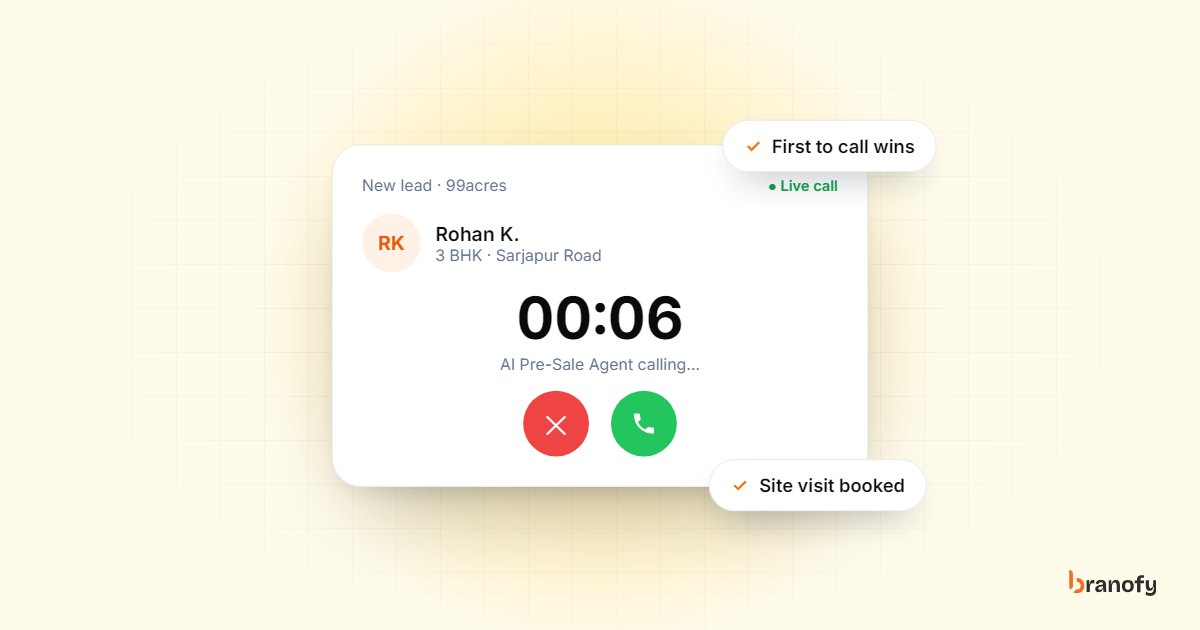
Speed-to-lead in Indian real estate: why the first call wins
Indian property buyers enquire with several projects at once, and the developer who calls first usually books the visit. How to get your response time down.
October 27, 2026
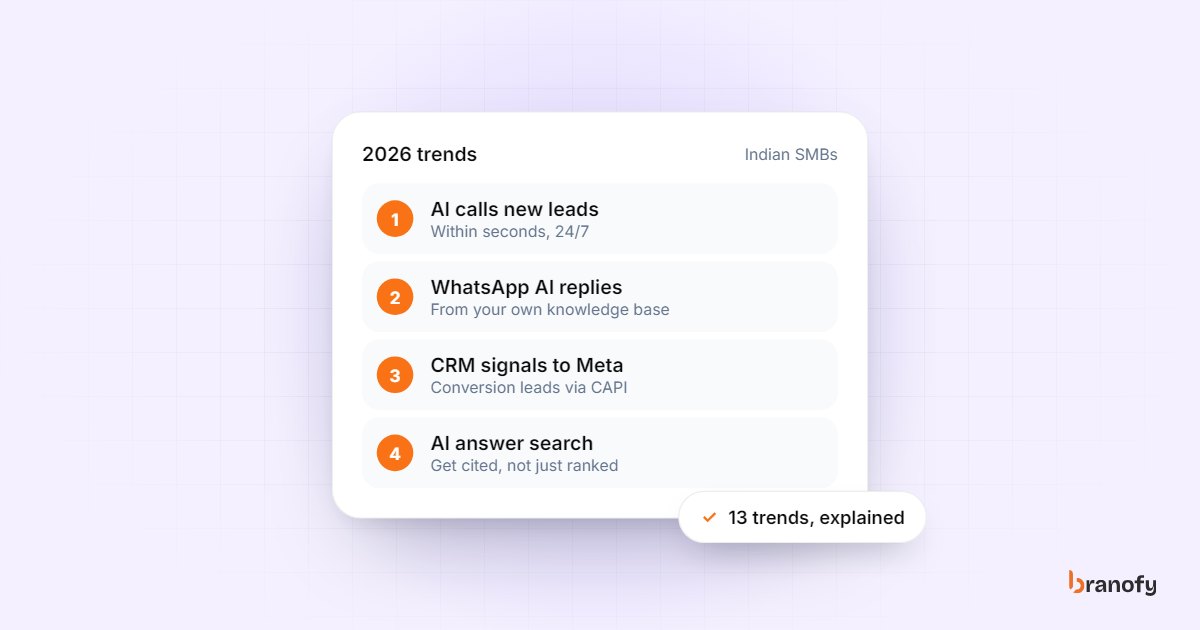
13 AI marketing automation trends for Indian SMBs in 2026
The AI marketing automation trends that matter for Indian SMBs buying leads from Meta, Google and portals in 2026, and which ones to act on first this year.
February 3, 2026
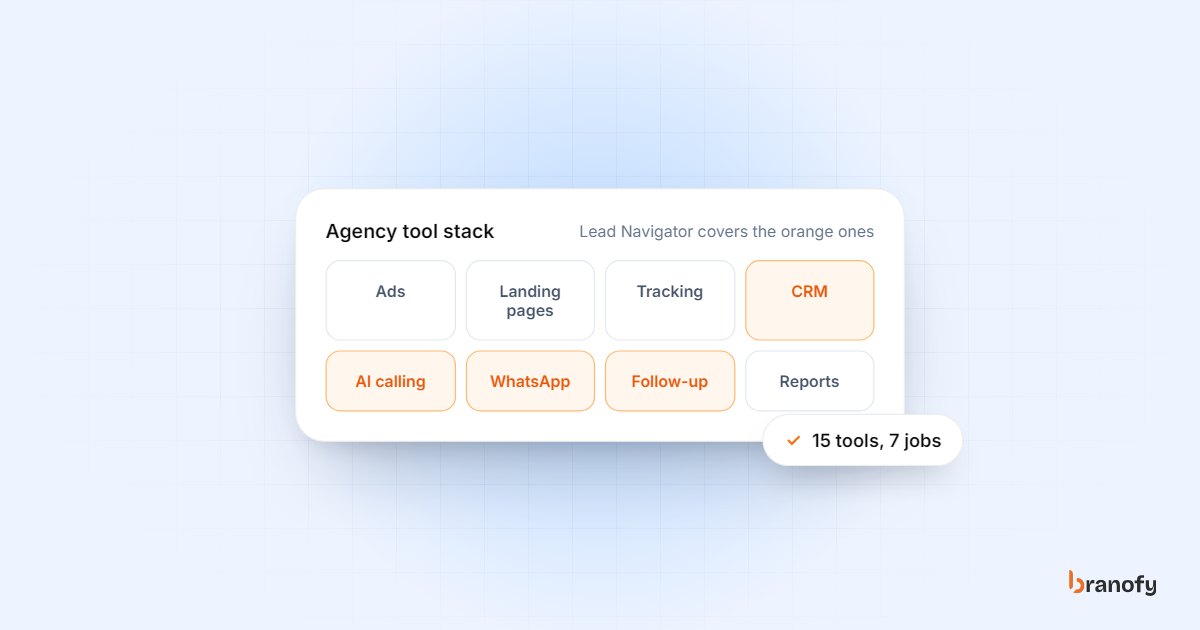
15 marketing automation tools every agency needs in 2026
The 15 marketing automation tools and jobs an Indian agency needs in 2026, from ad platforms and landing pages to instant lead calling, WhatsApp and reporting.
January 29, 2026